Stimson Building – Spring Street at Third Street |
 |
|
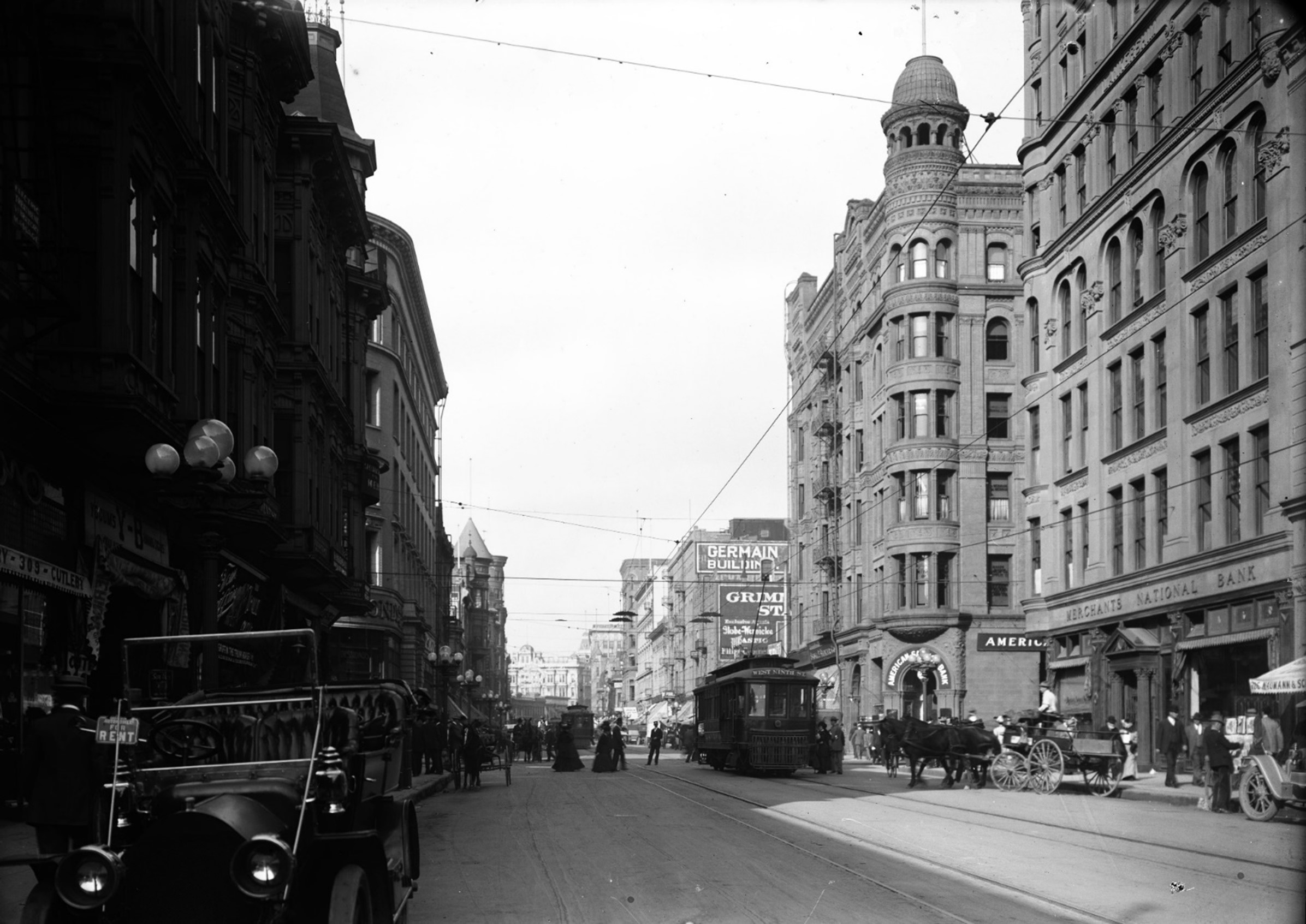
| (ca. 1907)* - Looking north on Spring Street toward Third Street. The Stimson Building stands on the northeast corner. |
Historical Notes The Stimson Building was completed in 1893 and quickly became one of the most recognizable structures in early downtown Los Angeles. Designed in the Richardsonian Romanesque style, the six story stone building featured heavy masonry, arched windows, projecting bays, and a distinctive observation tower. Located at the busy intersection of Spring and Third streets, the building stood near the southern edge of the Spring Street Financial District. This area was rapidly developing into the city’s commercial core during the late nineteenth and early twentieth centuries. |
 |
|
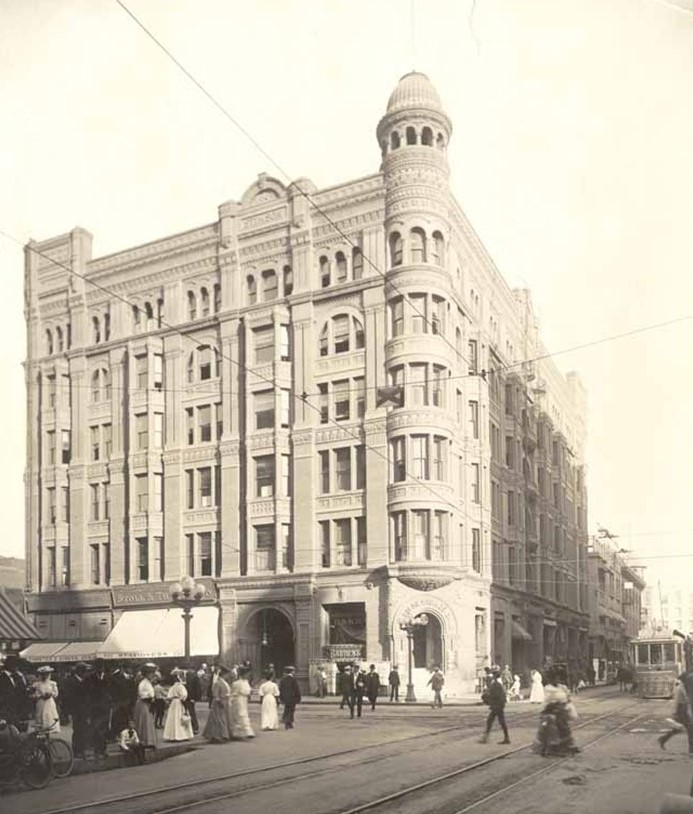
| (ca. 1908)*- Looking east on Third Street at Spring Street showing the Stimson Building on the northeast corner at 256 South Spring Street. |
Historical Notes The building was commissioned by Thomas D. Stimson, a prominent lumber magnate who had relocated to Los Angeles from Michigan. Architect Carroll H. Brown designed the structure in 1893, and it was considered one of the city’s earliest high rise office buildings. Originally constructed at a cost of about one hundred fifty thousand dollars, the Stimson Building reflected both wealth and confidence in Los Angeles’s future. Its commanding presence made it a visual anchor at one of downtown’s busiest intersections. |
 |
|
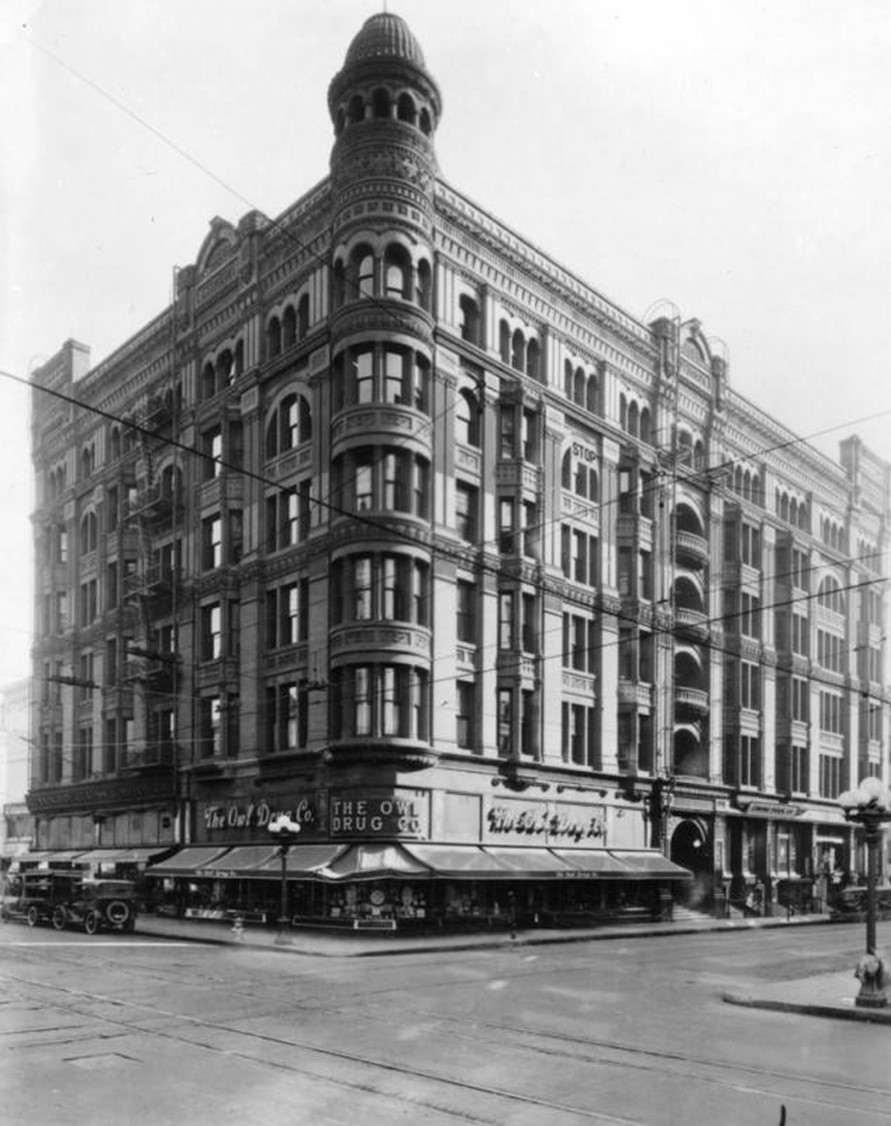
| (1920)* - The Stimson Building on the northeast corner of Third and Spring streets with Owl Drug Company occupying the ground floor. |
Historical Notes By the 1920s, the Stimson Building had transitioned fully into commercial use, housing offices above street level retail. National chains such as Owl Drug Company occupied prominent corner storefronts during this period. Spring Street had become a destination for banking, shopping, and entertainment. Streetcars, automobiles, and pedestrians passed continuously through this intersection, making it one of the most active locations in the city. |
 |
|
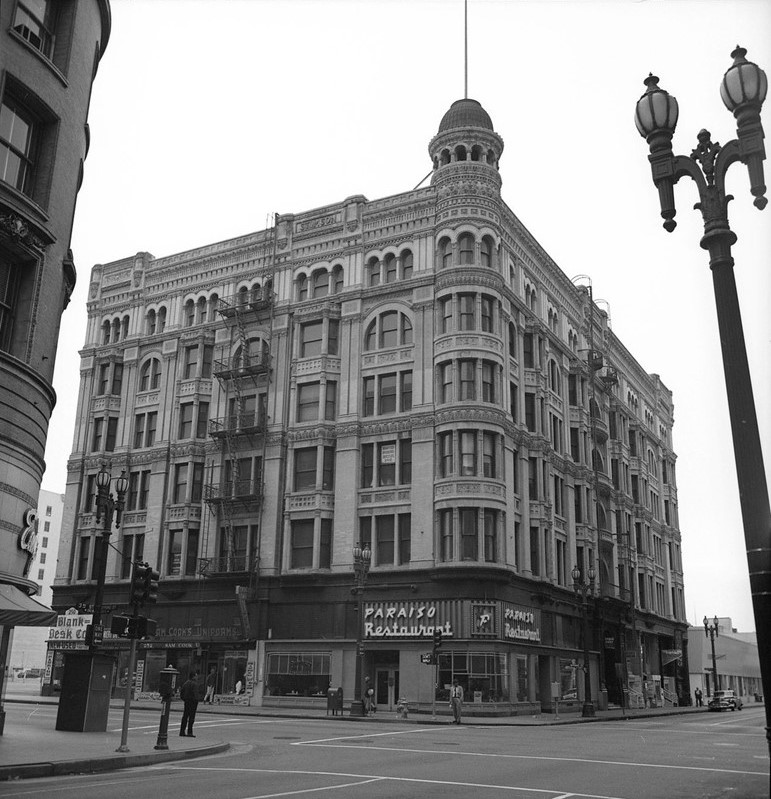
| (1950)* - View of the Stimson Building at the northeast corner of Third and Spring streets. Paraiso Restaurant occupies the ground floor. |
Historical Notes In the postwar years, the Stimson Building remained in use but was increasingly seen as outdated. Newer buildings nearby reflected modern architectural styles and changing expectations for office space. Restaurants and small businesses on the ground floor helped keep the building active, even as downtown Los Angeles began to experience shifting economic patterns and early signs of decline. |
 |
|
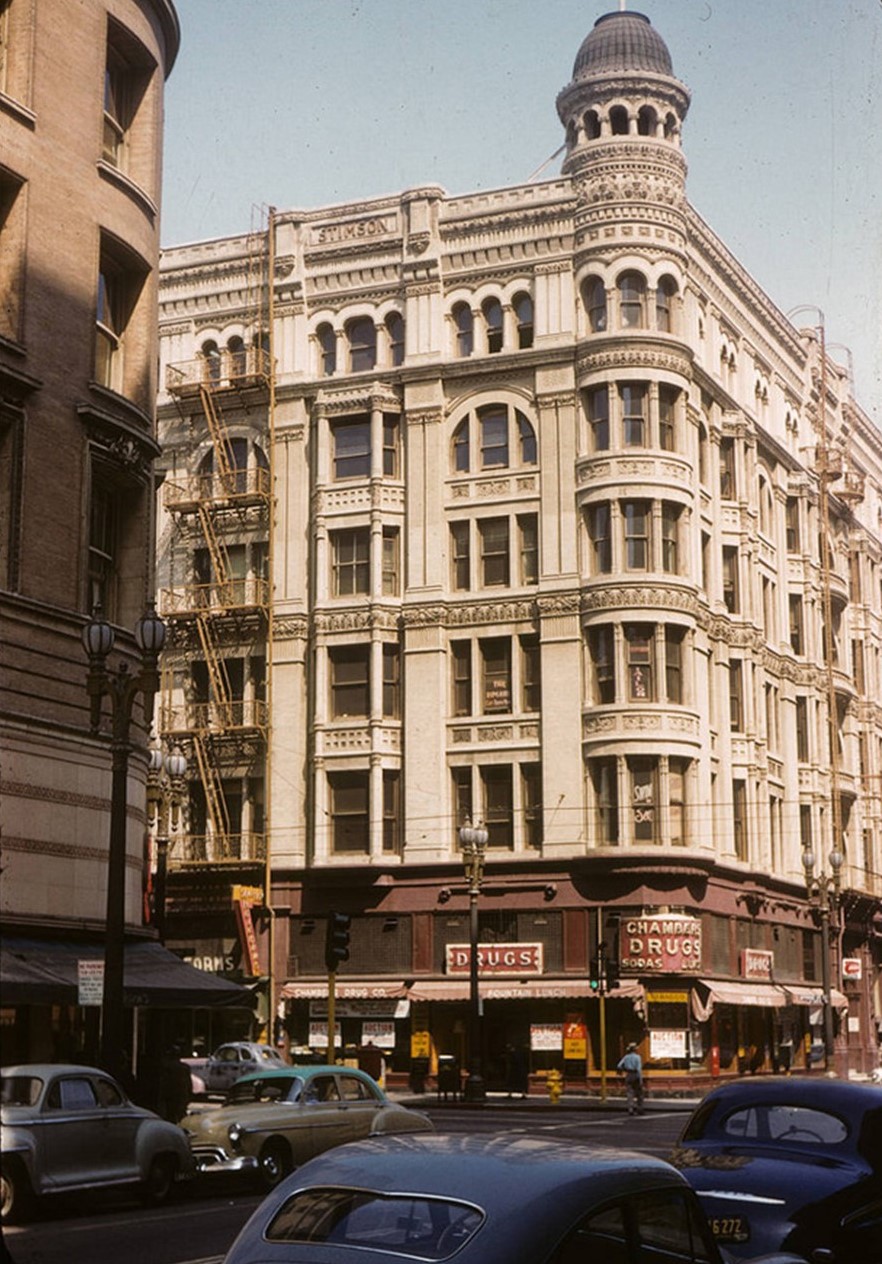
| (1955)* - The Stimson Building at 256 South Spring Street. |
Historical Notes By the mid 1950s, the Stimson Building stood as a reminder of an earlier era of downtown development. Its heavy stone construction contrasted sharply with newer steel and glass buildings rising elsewhere in the city. Despite its architectural significance, preservation was not a priority at the time. Plans for redevelopment increasingly favored demolition over reuse. |
 |
|
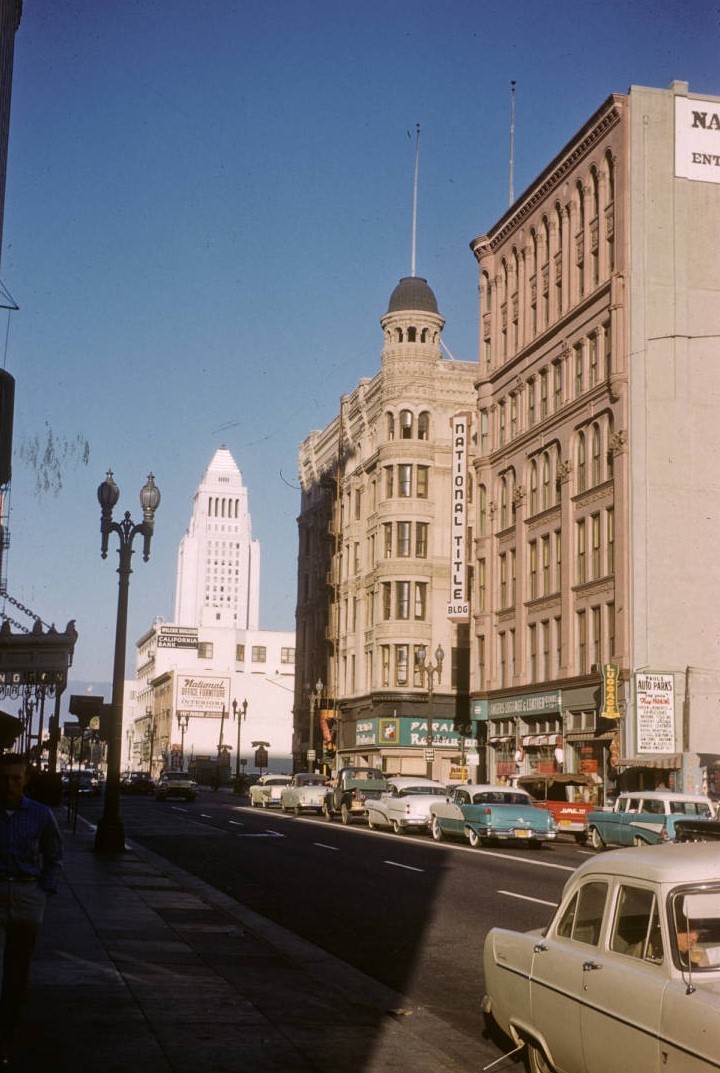
| (1959)* - Looking north on Spring Street showing the Stimson Building on the northeast corner of Third Street. The National Title Building stands across the street on the southeast corner. |
Historical Notes This view captures the Stimson Building shortly before its demolition. Although still structurally sound, it was surrounded by newer commercial buildings that reflected mid twentieth century design trends. The intersection of Spring and Third streets remained busy, but the character of downtown was changing. Older landmarks were increasingly seen as obstacles to modernization. |
Then and Now
 |
|
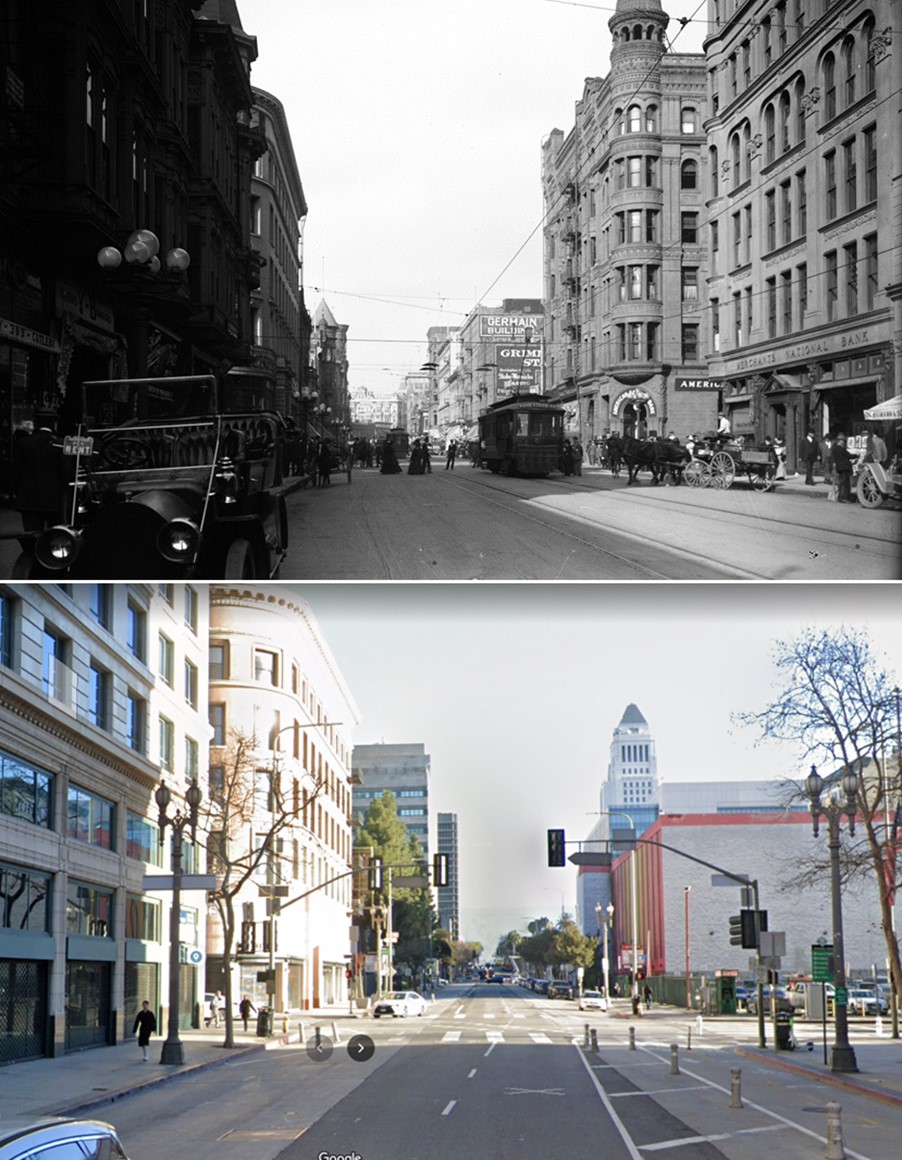
| (1907 vs 2023)* - Looking north on Spring Street toward Third Street. Photo comparison by Jack Feldman. |
Historical Notes For roughly seventy year, the Stimson Building occupied the northeast corner of Spring and Third streets, serving as a landmark during Los Angeles’s rise as a major city. Completed in 1893, it witnessed the transition from streetcars and horse drawn vehicles to automobiles and modern traffic. The building was demolished in 1963 and replaced by a parking lot. Its absence reflects a period when historic structures were routinely removed in favor of redevelopment, leaving few physical traces of early downtown Los Angeles at this intersection. |
* * * * * |
|
Other Sections of Interest |
|
Water and Power in Early LA |
|
Newest Additions |
New Search Index |

A new SEARCH INDEX has been added to help navigate through the thousands of topics and images found in our collection. Try it out for a test run.
Click HERE for Search Index |
* * * * * |
< Back