The Original Farmers Market at Third and Fairfax
Long before Third and Fairfax became one of Los Angeles' best known intersections, the area was part of a 256 acre dairy ranch owned by Arthur Fremont Gilmore. Around 1900, oil was discovered while drilling for water, and the dairy eventually gave way to an oil field. The Gilmore family later developed portions of the property for businesses, sports and entertainment.The Farmers Market began during the Great Depression, when Roger Dahlhjelm and Fred Beck proposed using part of the Gilmore property as a place where local farmers could sell directly to the public. The market opened on July 14, 1934, with farmers selling produce from trucks and temporary stalls. What began as a simple idea quickly grew into a permanent marketplace of produce stands, restaurants and specialty shops. More than 90 years later, the Original Farmers Market remains at Third and Fairfax and is designated Los Angeles Historic-Cultural Monument No. 543. |
From Ranch Land to Landmark
 |
|
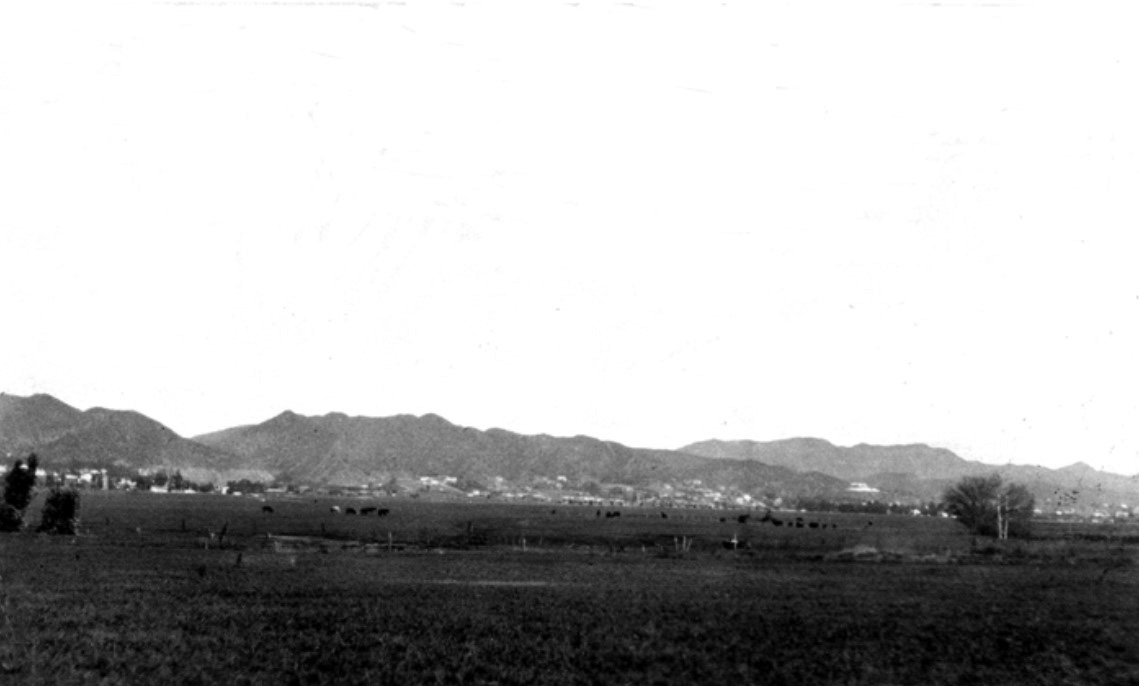
| (ca. 1900)* – View looking north toward the Hollywood Hills across open land near present day Third Street and Fairfax Avenue. |
Historical Notes In 1880, Arthur Fremont Gilmore and a partner acquired dairy farms in the Los Angeles area. When they divided their holdings ten years later, Gilmore took control of a 256 acre ranch, its dairy herd and farmhands at what is now Third Street and Fairfax Avenue. Around 1900, while drilling wells to provide water for an expanding dairy herd, Gilmore discovered oil. Before long, oil derricks replaced the cows and the property became the center of the Gilmore family's growing oil business. |
 |
|
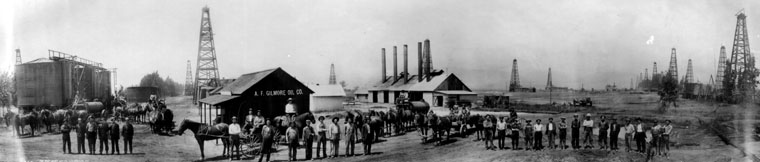
| (ca. 1910)* – Employees of the A. F. Gilmore Oil Co. pose in front of the company's buildings, with oil derricks covering the property near present day Third Street and Fairfax Avenue. |
Historical Notes The discovery of oil transformed the former dairy ranch. The Gilmore family developed an oil company that became a familiar name throughout the West, while portions of the original property were later used for sports, entertainment and commercial development. By the early 1930s, much of the land around Third and Fairfax remained available for new uses, setting the stage for the experiment that would become Farmers Market. |
 |
|
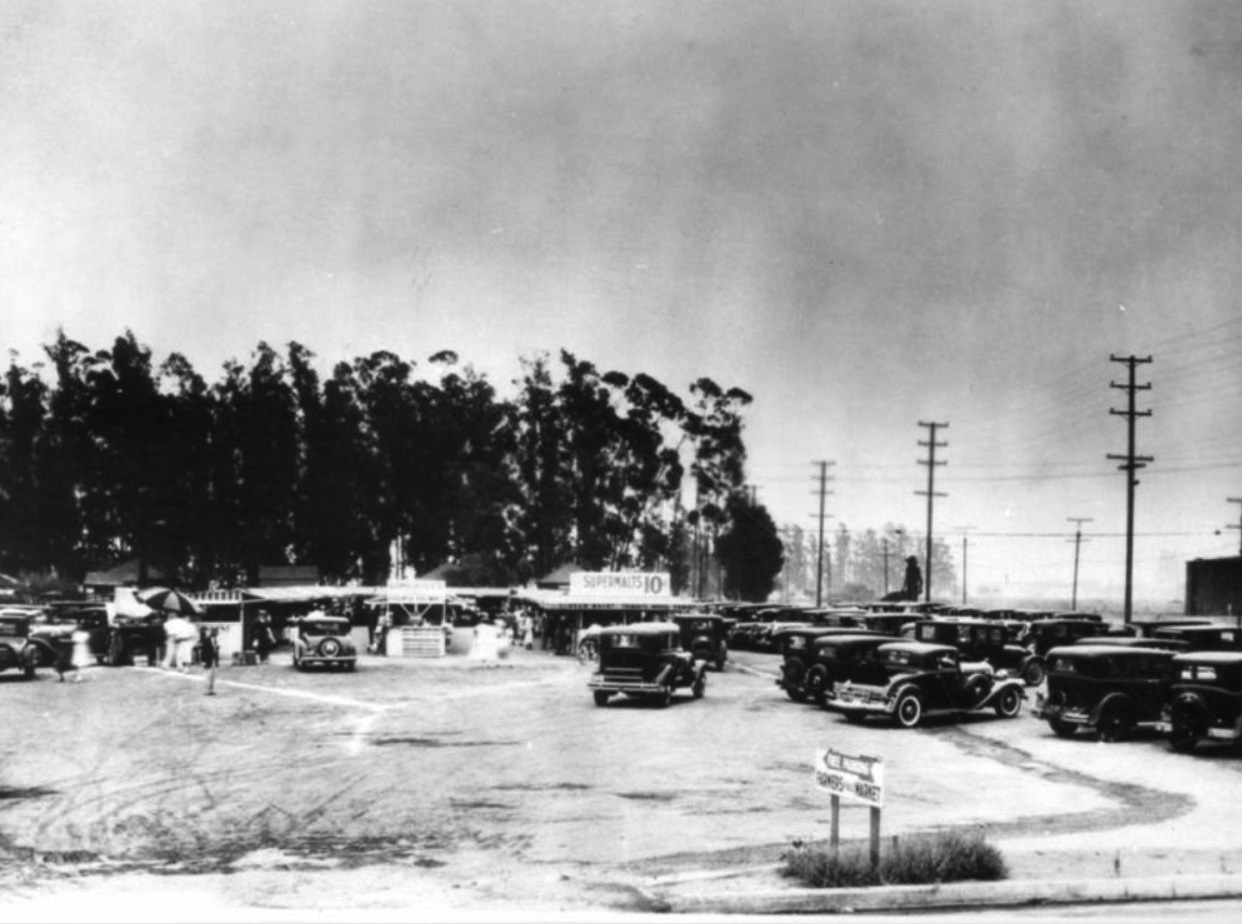
| (1934)* - Rows of cars are parked on a dirt lot beside the early Farmers Market buildings at the northeast corner of Third Street and Fairfax Avenue. A sign at the entrance directs visitors to the market. |
Historical Notes During the Great Depression, businessman Roger Dahlhjelm and advertising copywriter Fred Beck approached Earl Bell Gilmore with an idea for a market where local farmers could sell directly to the public. Gilmore agreed to provide space on the family property. Farmers Market opened on July 14, 1934. Eighteen merchants, most of them farmers, initially sold produce and other goods from trucks and temporary stalls, paying 50 cents a day for space. |
 |
|
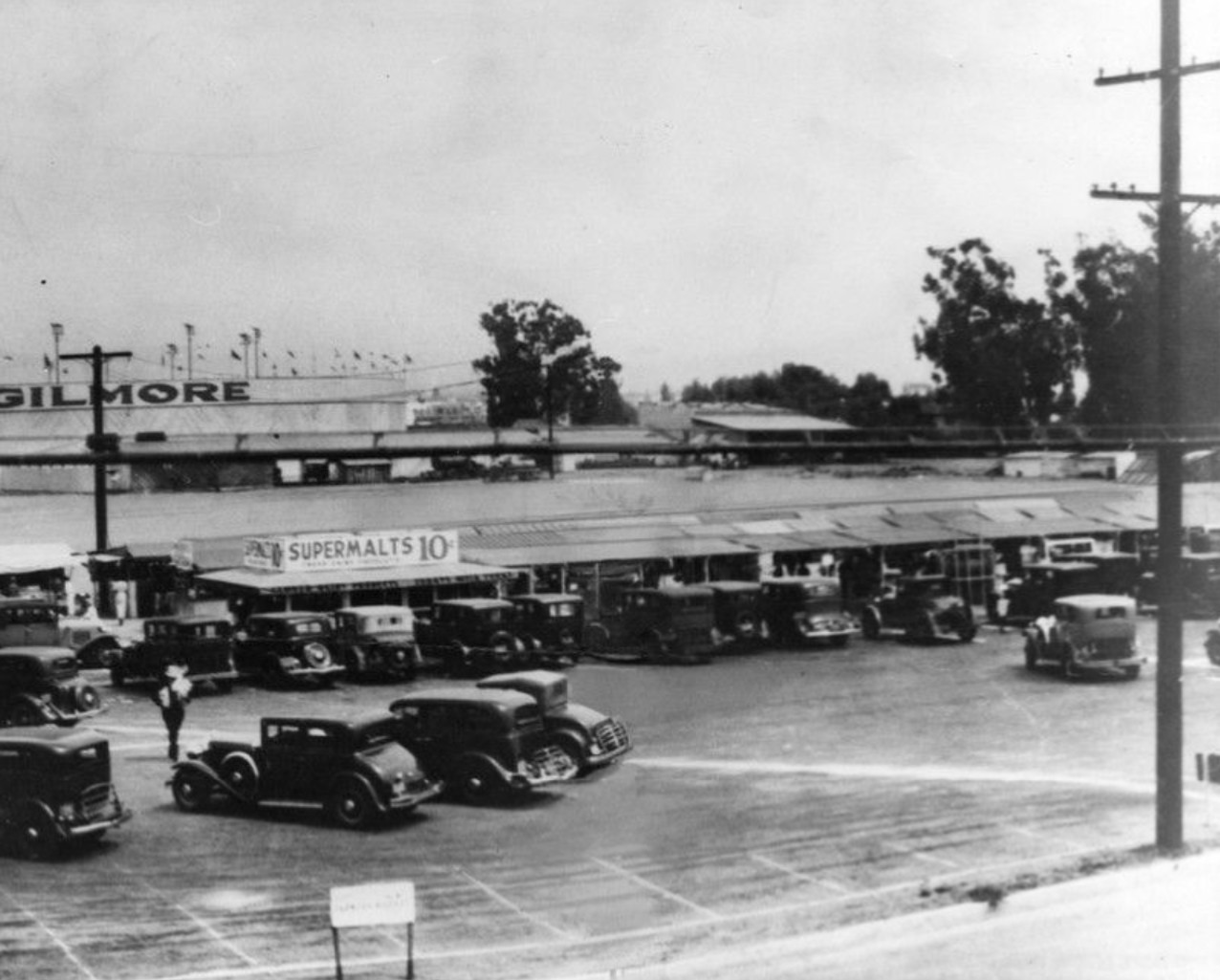
| (ca. 1934)* - Cars are parked on the dirt lot in front of the market's early buildings, where a sign advertises "Supermalts 10 cents." The large GILMORE sign in the background marks Gilmore Stadium, which opened that same year. |
Historical Notes The new marketplace quickly outgrew its temporary beginnings. Within months, farmers and merchants were moving into permanent stalls. Nearby Gilmore Stadium also opened in 1934, beginning another chapter in the development of the former Gilmore ranch. |
 |
|
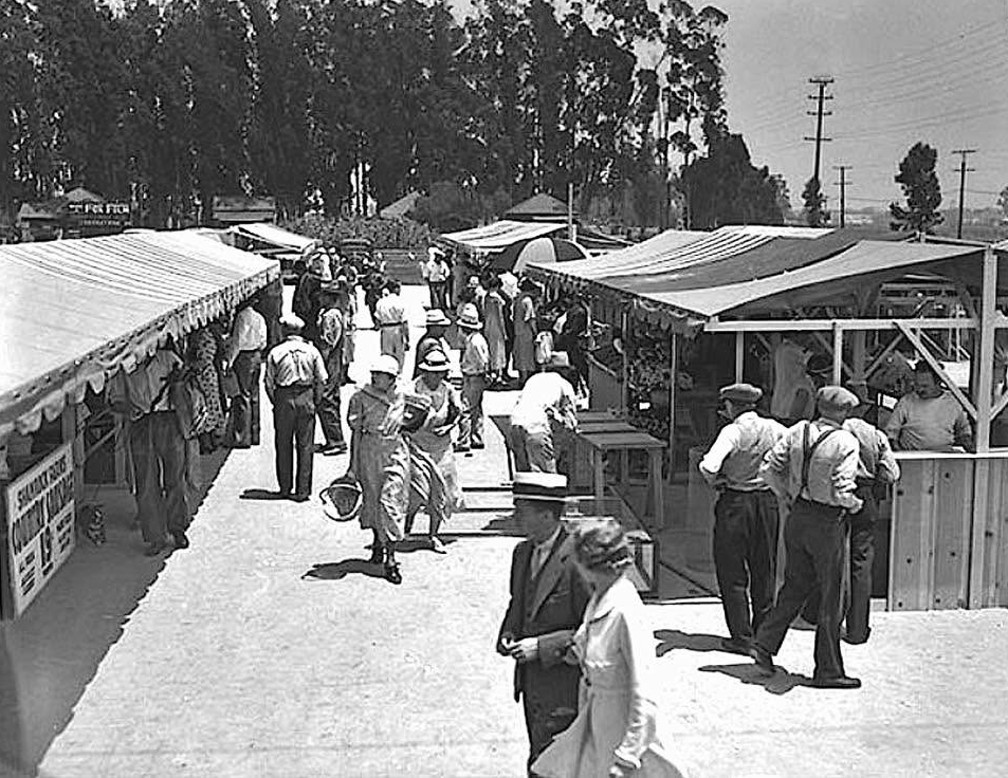
| (1934)* - Opening day of Farmers Market at Third Street and Fairfax Avenue, July 14, 1934. |
Historical Notes The market opened during the depths of the Great Depression, giving local farmers an inexpensive place to sell directly to consumers and giving shoppers access to fresh food directly from the growers. The idea caught on quickly. What began with trucks and temporary stands would soon develop into a permanent marketplace. |
.jpg) |
|
| (1934)* – Carts filled with fresh produce draw shoppers during the opening days of Farmers Market in July 1934. |
Historical Notes By October 1934, only a few months after the market opened, farmers and merchants were moving into permanent stalls. Restaurants, grocers and service businesses joined the produce sellers, and the market's first Fall Festival was held that year. |
 |
|
| (1930s)* - Aerial view looking northeast showing a busy Farmers Market surrounded by parked cars. Third Street and Fairfax Avenue meet at lower right, Gilmore Stadium stands at upper left, and a Gilmore service station is visible at lower center. |
Historical Notes The aerial view shows how quickly Farmers Market became established and also illustrates its close relationship with the automobile. Large parking areas surrounded the market, making it convenient for shoppers arriving from across Los Angeles. |
 |
|
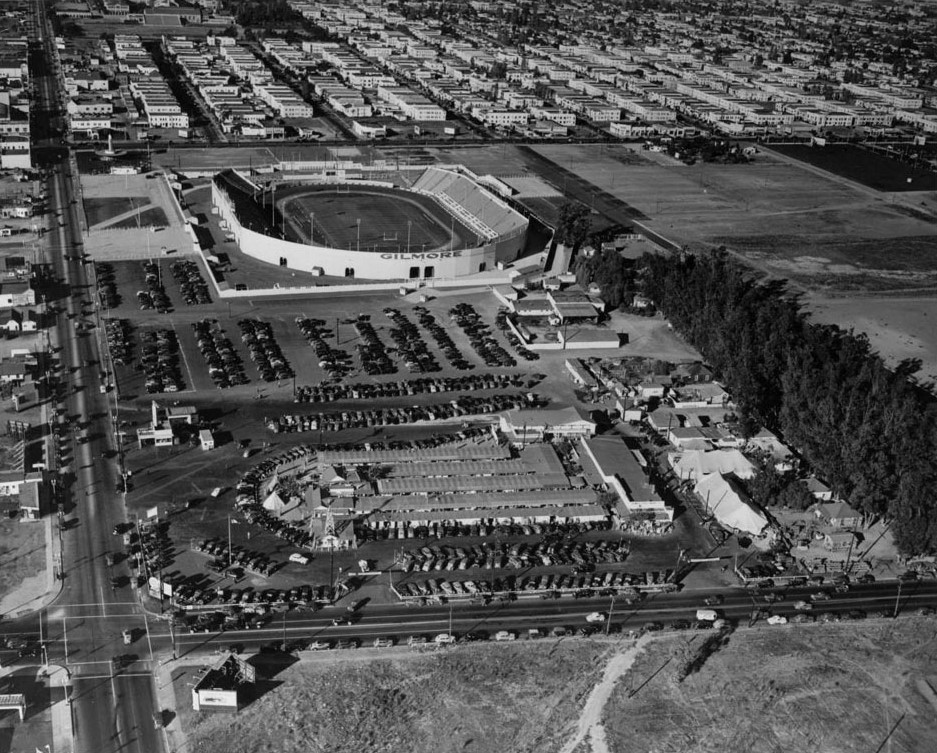
| (1938)* - Aerial view looking north showing Farmers Market at Third Street and Fairfax Avenue (lower left). Gilmore Stadium stands near Fairfax Avenue and Beverly Boulevard at upper left. Within a year, Gilmore Field would be built on the open land at center right. |
Historical Notes Gilmore Field opened in 1939 and became home of the Hollywood Stars of the Pacific Coast League. Together with Gilmore Stadium, Farmers Market and other nearby attractions, it helped make the former Gilmore ranch a popular destination for recreation, shopping and entertainment. |
 |
|
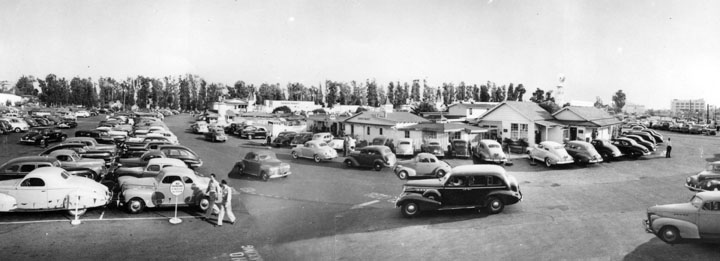
| (ca. 1940)* - Panoramic view showing rows of cars parked around the buildings of Farmers Market. |
Historical Notes As automobiles became the preferred means of transportation in Los Angeles, much of the open land surrounding Farmers Market became parking. The ample parking helped distinguish the market from older commercial districts developed around streetcar and pedestrian traffic. |
 |
|
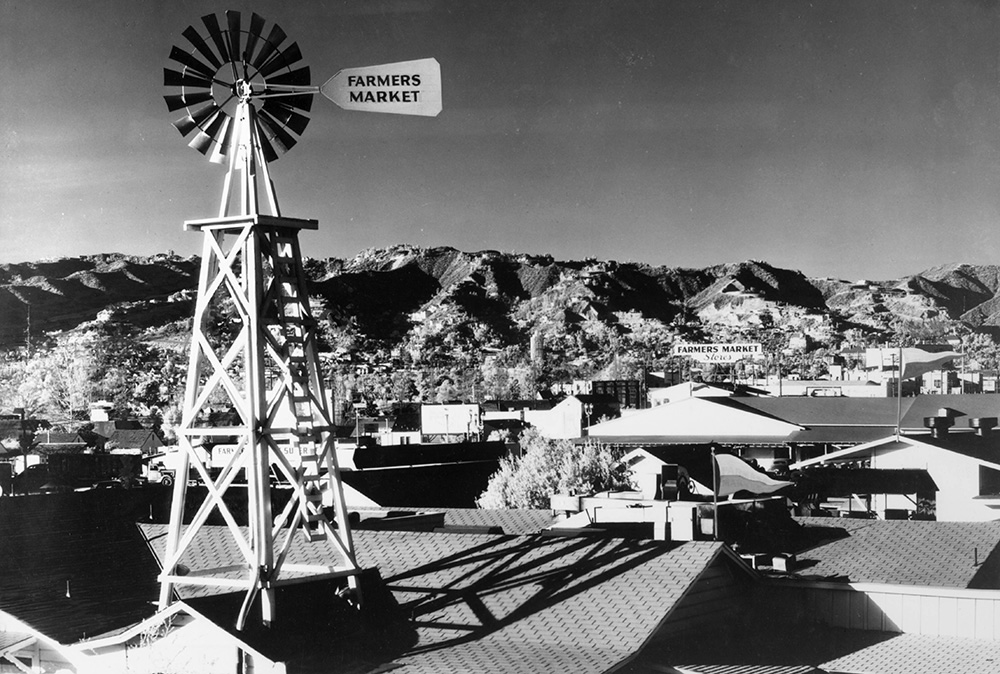
| (ca. 1940s)^*- The Farmers Market windmill rises above the market buildings, with the Hollywood Hills in the distance. |
Historical Notes The windmill was one of Farmers Market's earliest visual landmarks. In 1948, the Clock Tower replaced it as the market's principal symbol. |
 |
|
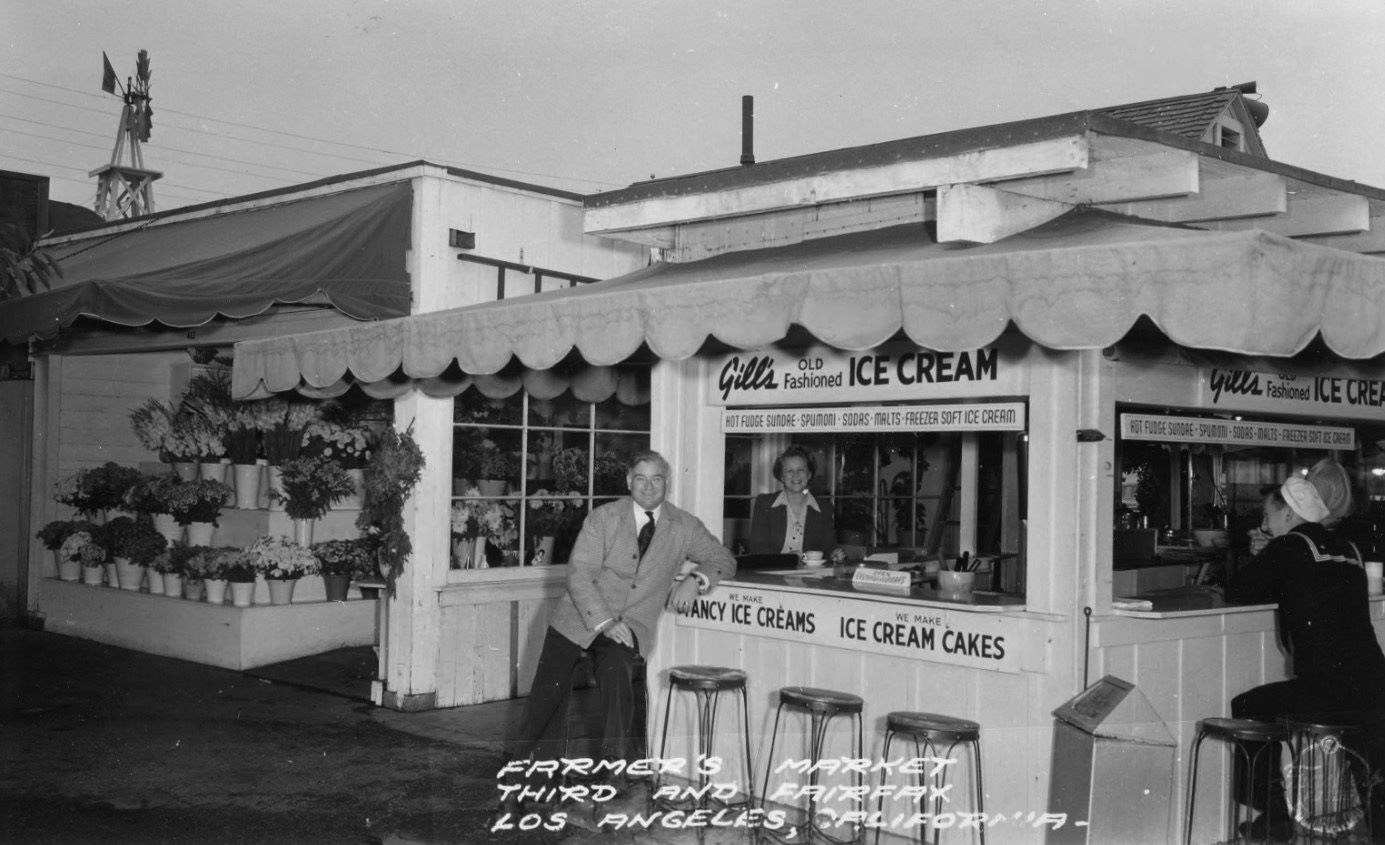
| (1942)* - Postcard view of Gill's Old Fashioned Ice Cream, with customers seated at the counter, including a sailor in uniform. The Farmers Market windmill can be seen at upper left. |
Historical Notes Gill's Old Fashioned Ice Cream was one of the early food stands that helped establish Farmers Market as more than a place to buy fresh produce. By the early 1940s, lunch counters, restaurants and specialty food stands had become an important part of the market's character. The sailor seated at the counter also places the scene in wartime Los Angeles, when servicemen were a familiar sight throughout the city. |
 |
|
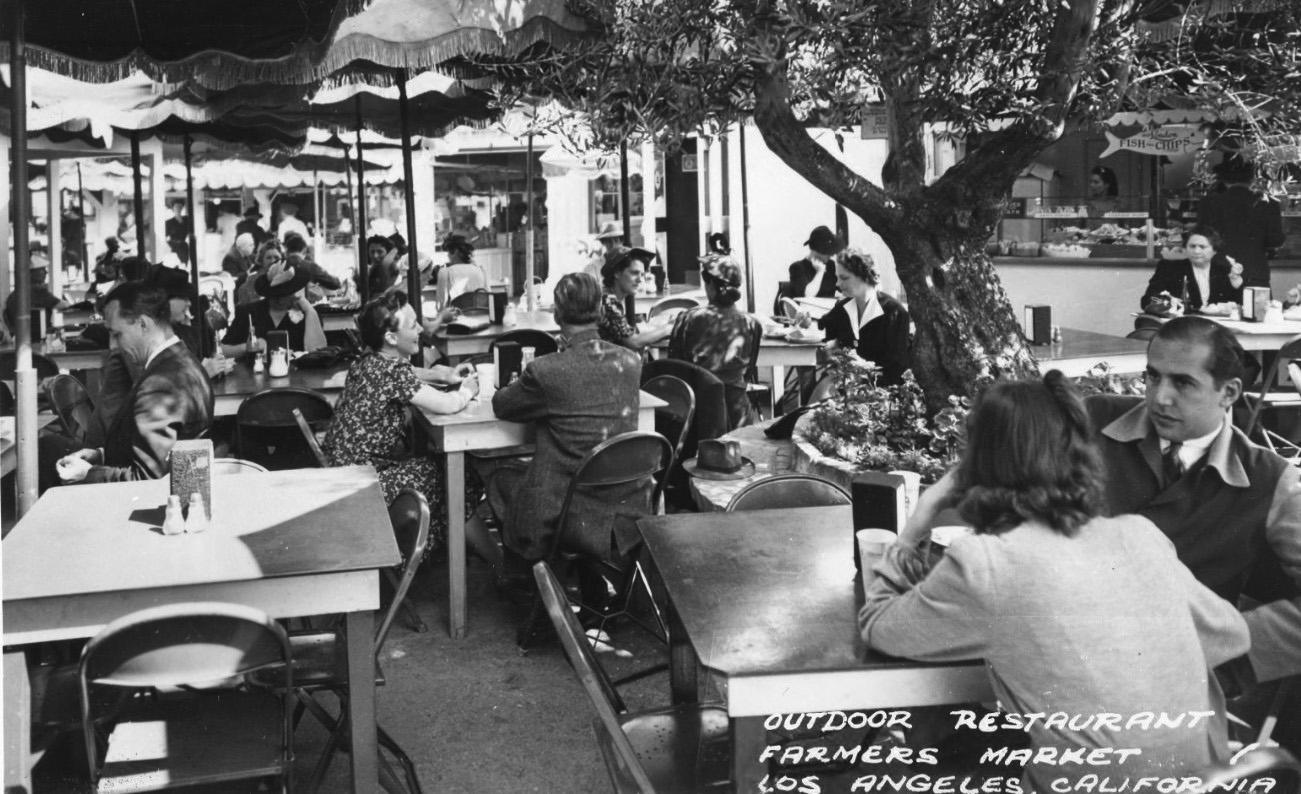
| (1942)* - Postcard view showing an early outdoor restaurant at Farmers Market. |
Historical Notes Food soon became as important to Farmers Market as fresh produce. Restaurants, lunch counters and specialty food stands helped transform the market from a place primarily for grocery shopping into a destination where Angelenos could shop, eat and socialize. |
 |
|
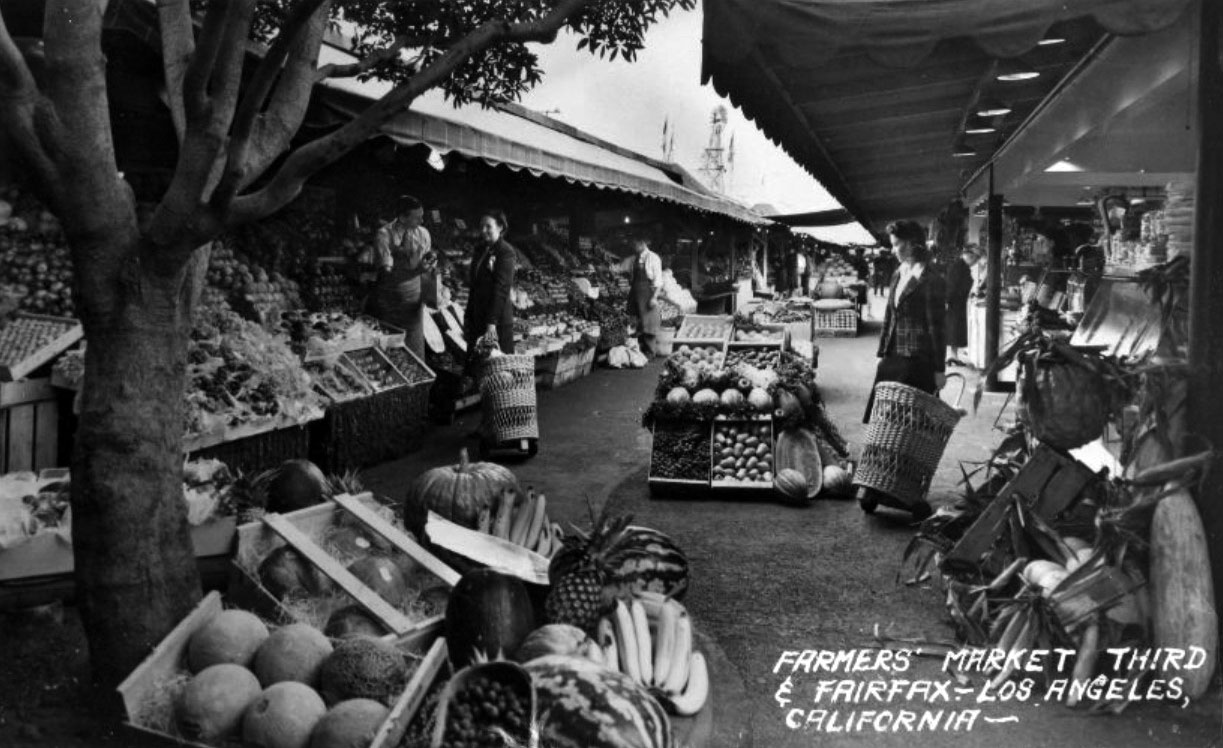
| (1942)* – Postcard view of two women pulling woven basket carts as they shop near the fruit stands at Farmers Market. |
Historical Notes Although restaurants and specialty shops were becoming increasingly important, fresh produce remained at the heart of Farmers Market. Shoppers moved from stand to stand selecting fruits and vegetables from individual vendors, much as customers had done when the market opened eight years earlier. |
 |
|
| (ca. 1940s)* - Shoppers inspect fresh produce at Farmers Market. Note the different styles of shopping carts and baskets. |
Historical Notes Scenes like this show the everyday side of Farmers Market during its early years. Unlike the aerial views and photographs of surrounding attractions, this image captures the market at street level, with shoppers examining produce and moving among the individual stands. |
 |
|
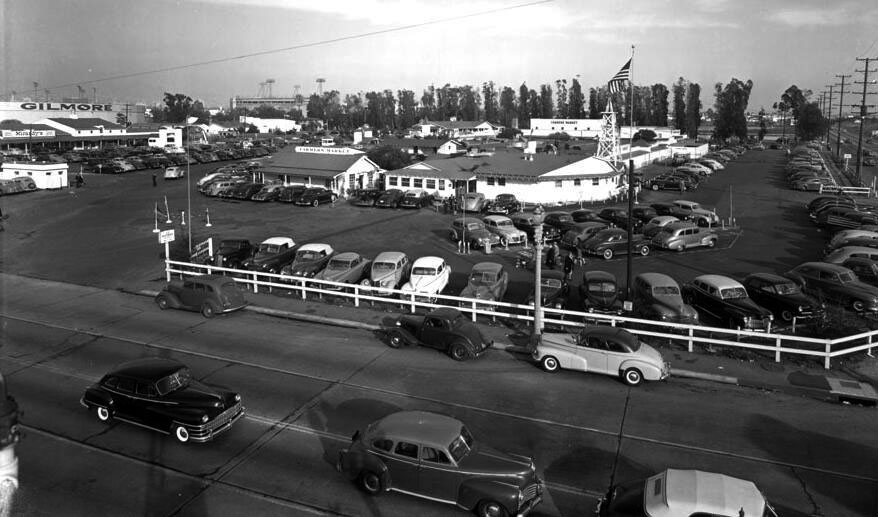
| (1945)* - View of Farmers Market at the northeast corner of Third Street and Fairfax Avenue. Gilmore Stadium can be seen at upper left, while the distinctive windmill stands beside the American flag. The white building next to the windmill housed the original Du-par's Restaurant. |
Historical Notes The first Du-par's opened at Farmers Market in 1938, founded by James Dunn and Edward Parsons, who combined portions of their surnames to create the restaurant's name. Known especially for its pancakes and pies, Du-par's became one of the market's best known longtime tenants. |
 |
|
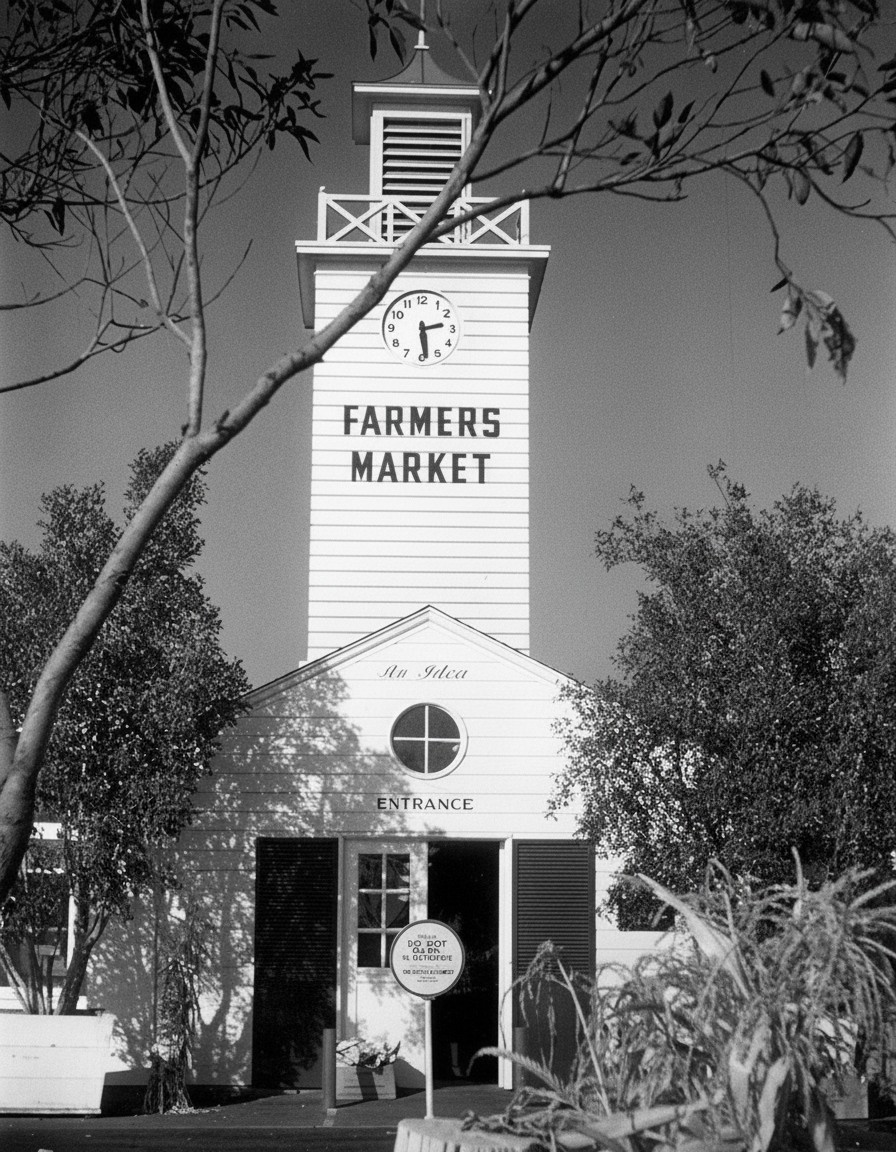
| (1948)* – The Farmers Market Clock Tower in 1948, the year it was installed. |
Historical Notes The Clock Tower replaced the windmill as Farmers Market's principal landmark in 1948. Its familiar "An Idea" inscription honors Fred Beck, Roger Dahlhjelm and the 18 original tenants who helped launch the market. The original Clock Tower now sits atop Starbucks at Farmers Market. |
 |
|
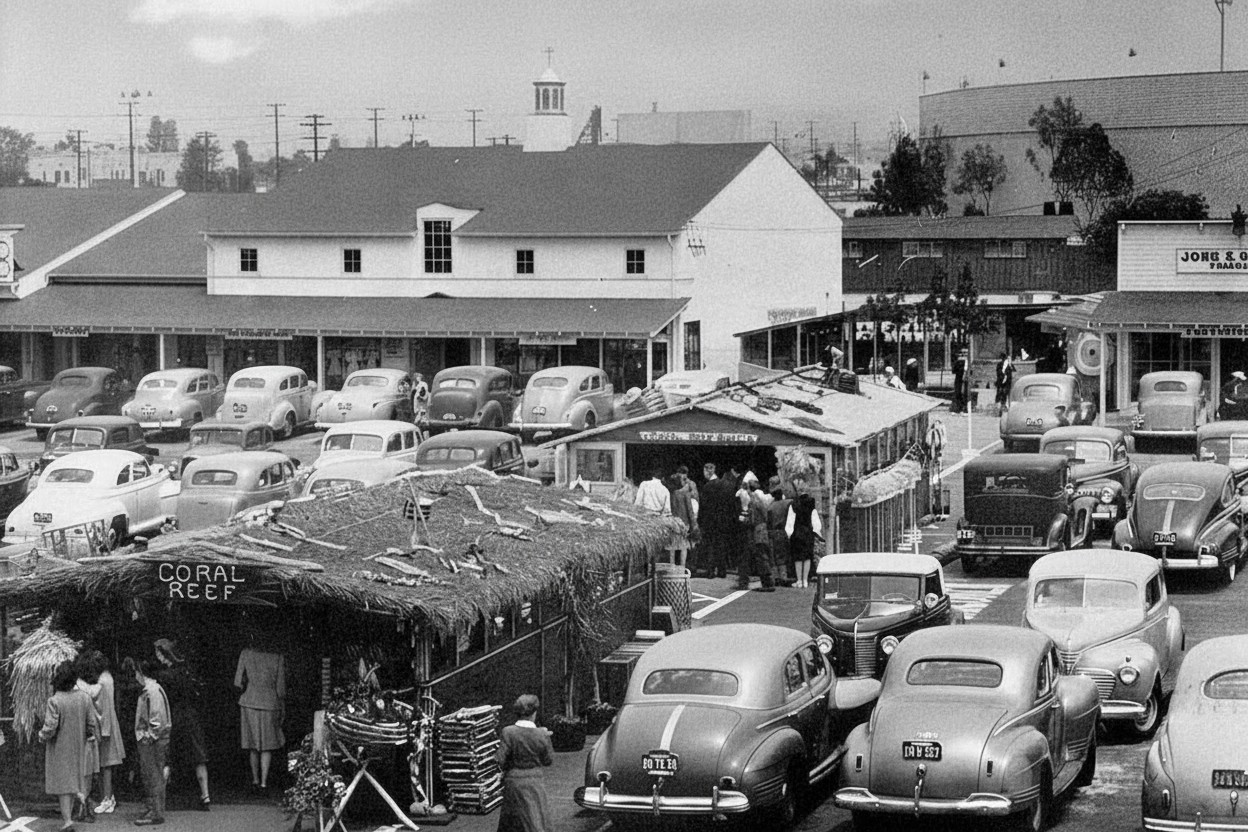
| (1949)* - Temporary shops occupy part of the Farmers Market parking lot, with Gilmore Stadium in the background. |
Historical Notes By the late 1940s, Farmers Market had expanded well beyond the simple produce stands of 1934. Temporary shops occupying part of the parking lot reflect the continued growth of the market as new merchants and businesses were added. |
 |
|
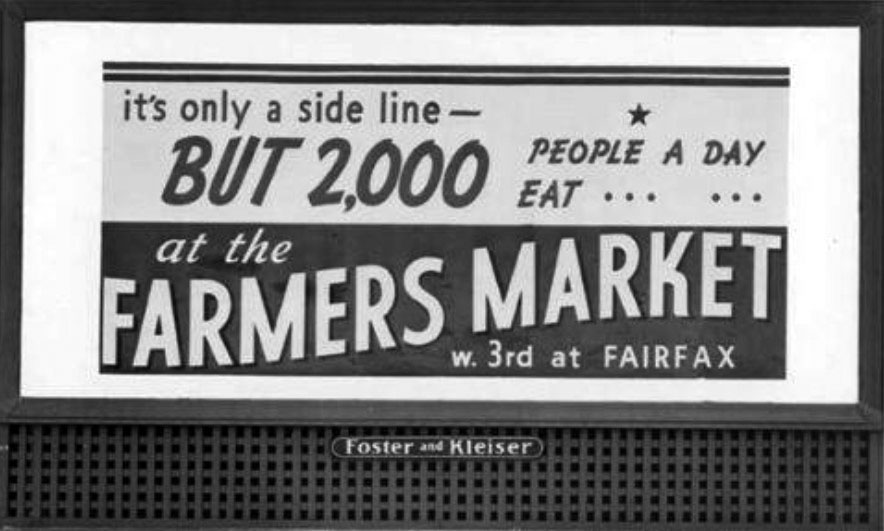
| (1949)* - Foster and Kleiser billboard advertising Farmers Market with the message: "2,000 People a Day Eat at the Farmers Market." |
Historical Notes The billboard illustrates how much Farmers Market had changed in its first 15 years. What began primarily as a place for farmers to sell fresh produce had also become a popular dining destination. |
 |
|
| (ca. 1952)* - View looking northeast across the Farmers Market parking lot, with Gilmore Stadium and the Gilmore Drive-in Theatre visible beyond the market. The Farmers Market Clock Tower, installed in 1948, can also be seen. |
Historical Notes This photograph captures the surrounding Gilmore property near the end of an era. Gilmore Stadium was demolished in 1952 to make way for CBS Television City, while the Gilmore Drive-In Theatre, which opened in 1948, remained in operation for nearly three decades. |
 |
|
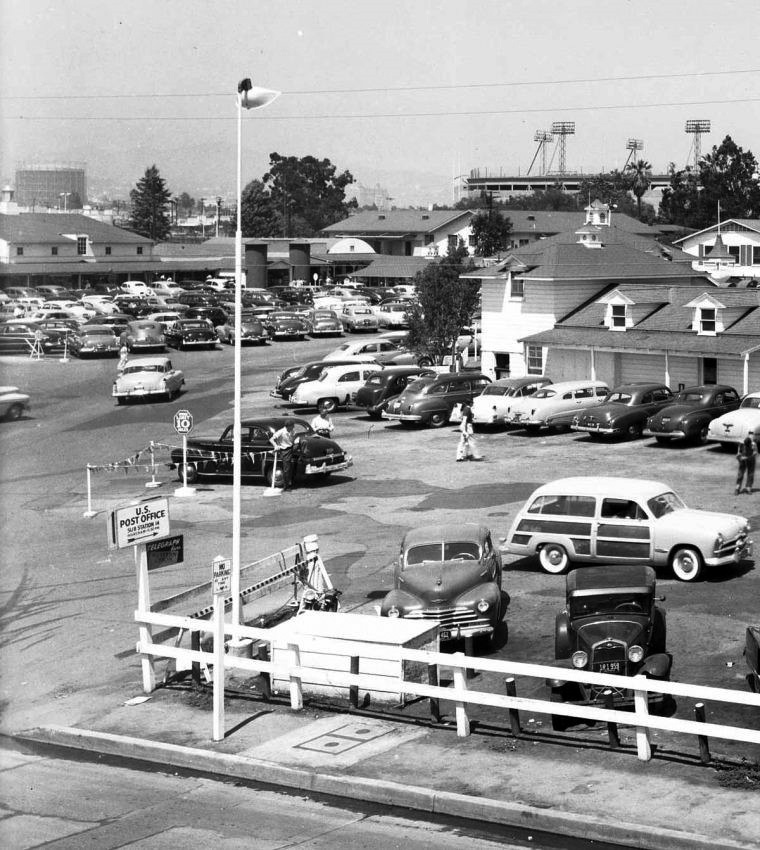
| (ca. 1952)* – Enlargement of the previous photo showing a large gas holder, or gasometer, in the distance beyond Gilmore Stadium. A sign at lower left reads "U.S. Post Office." |
Historical Notes Large gas holders were once a familiar part of the Los Angeles landscape. They stored gas and helped balance changes in supply and demand within the distribution system. Their size made them visible from considerable distances, as seen here beyond the Farmers Market area. |
 |
|
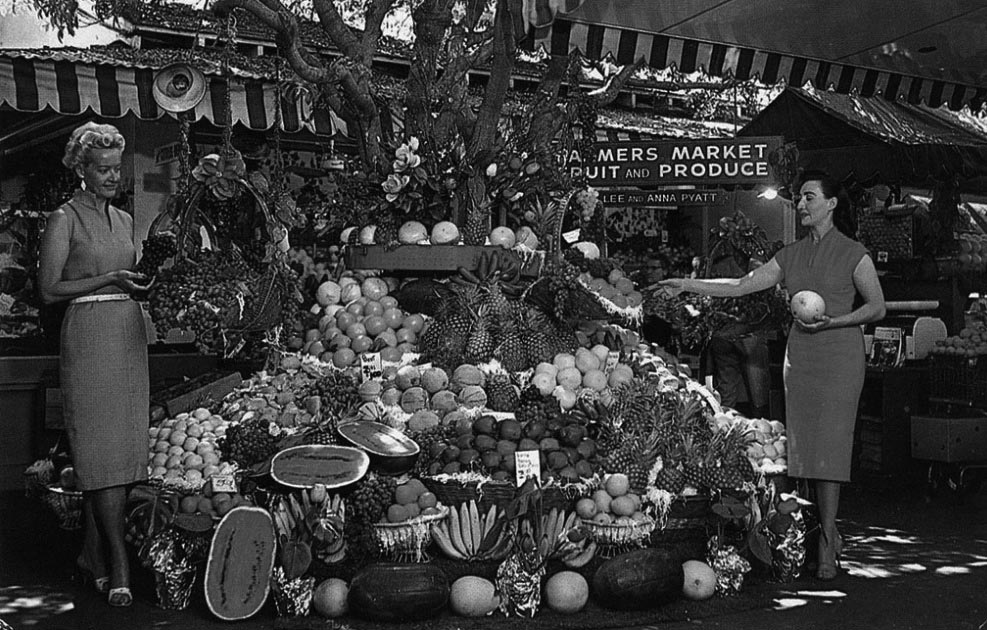
| (1950s)* - Two women pose in front of a fruit stand at Farmers Market. |
Historical Notes More than two decades after Farmers Market opened, produce stands continued to be an important part of the marketplace. By this time they shared the market with an expanding assortment of restaurants, specialty food stands and other businesses. |
 |
|
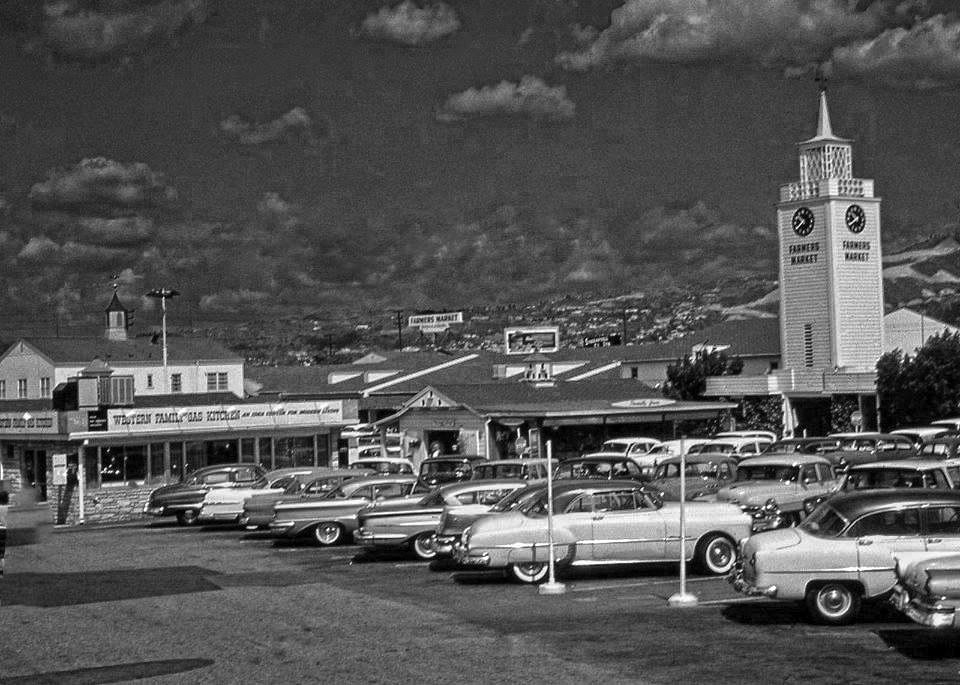
| (ca. 1958)* – View looking northwest across the Farmers Market parking lot toward the Clock Tower, with the Hollywood Hills in the background. |
Historical Notes By the late 1950s, the Clock Tower had become a familiar Farmers Market landmark. The surrounding area was changing rapidly, but the tower continued to mark Farmers Market at Third and Fairfax. |
 |
|
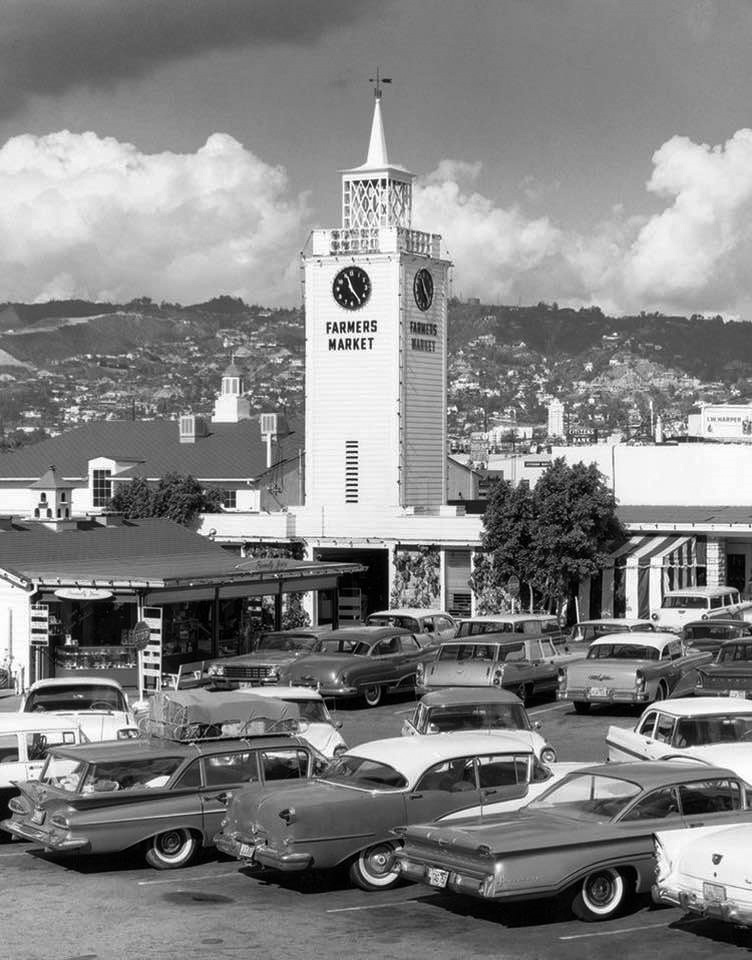
| (ca. 1960)* - View looking northwest toward the Farmers Market Clock Tower, with the Hollywood Hills in the distance. |
Historical Notes By 1960, Farmers Market had been a fixture at Third and Fairfax for more than 25 years. The Clock Tower, installed in 1948, had become one of the market's most recognizable features and a familiar landmark at the busy intersection. |
 |
|
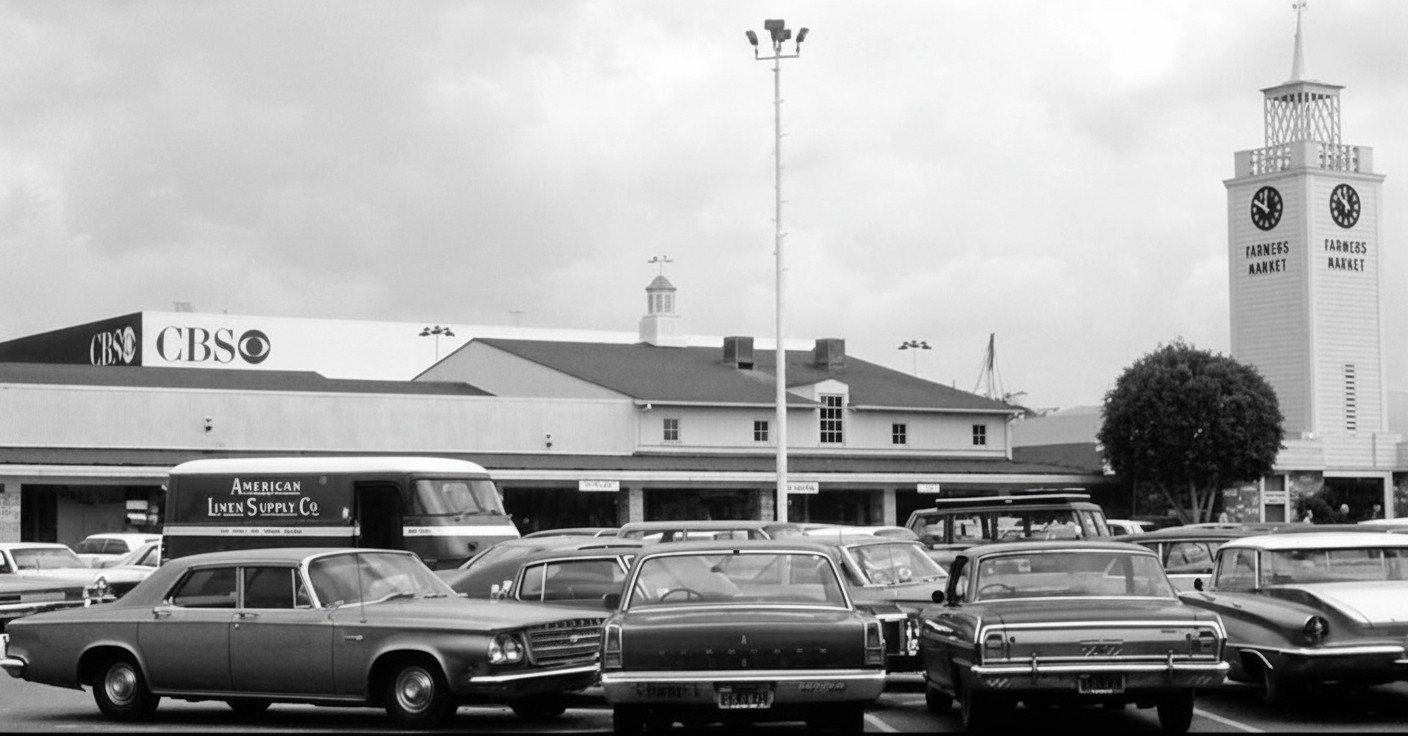
| (1969)* - View of Farmers Market looking northeast, with CBS Television City in the background. The Farmers Market Clock Tower stands at right. |
Historical Notes CBS Television City opened next to Farmers Market in 1952 on the former site of Gilmore Stadium. The television studios brought performers, production workers and visitors to the neighborhood, further adding to Farmers Market's role as a gathering place. |
 |
|
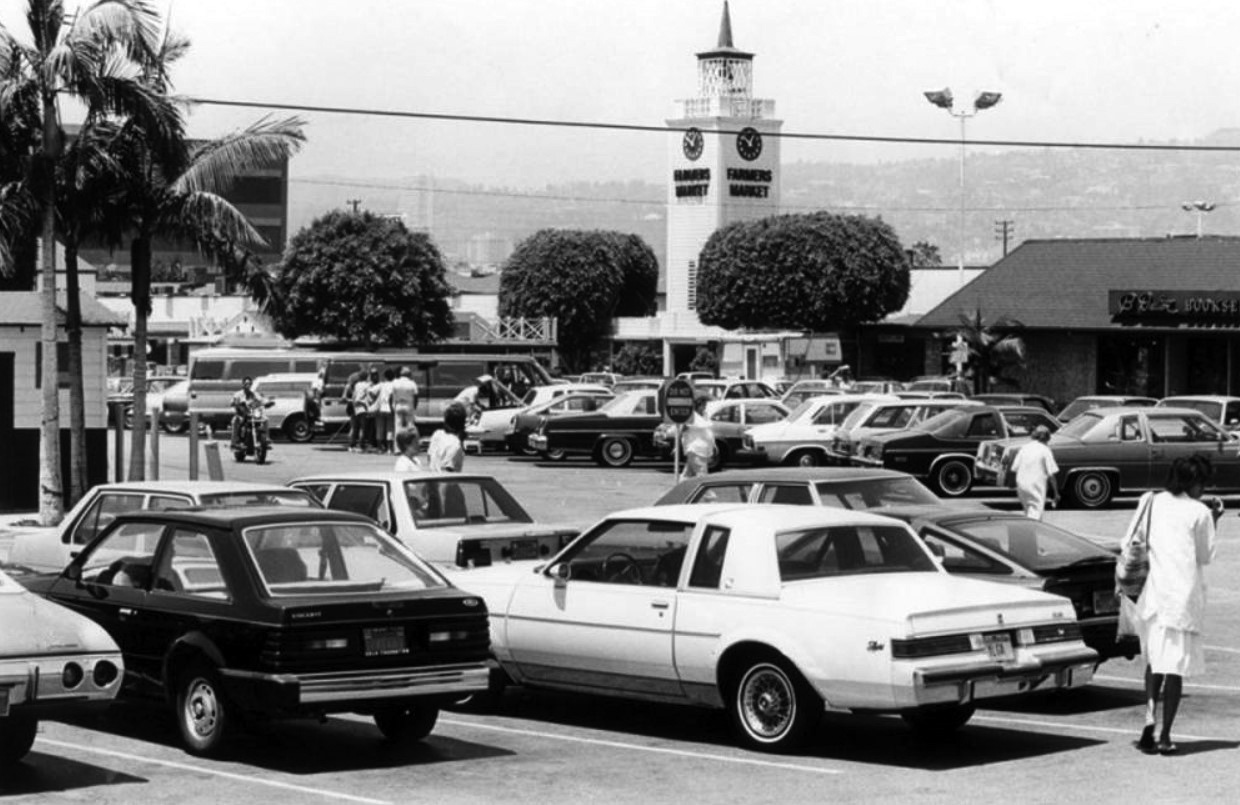
| (1987)* – View looking northwest across the Farmers Market parking lot toward the Clock Tower and Hollywood Hills. |
Historical Notes More than 50 years after Farmers Market opened, the large parking areas surrounding it remained an important part of the property. This view also preserves the setting before construction of The Grove changed much of the land immediately east of the market. |
 |
|
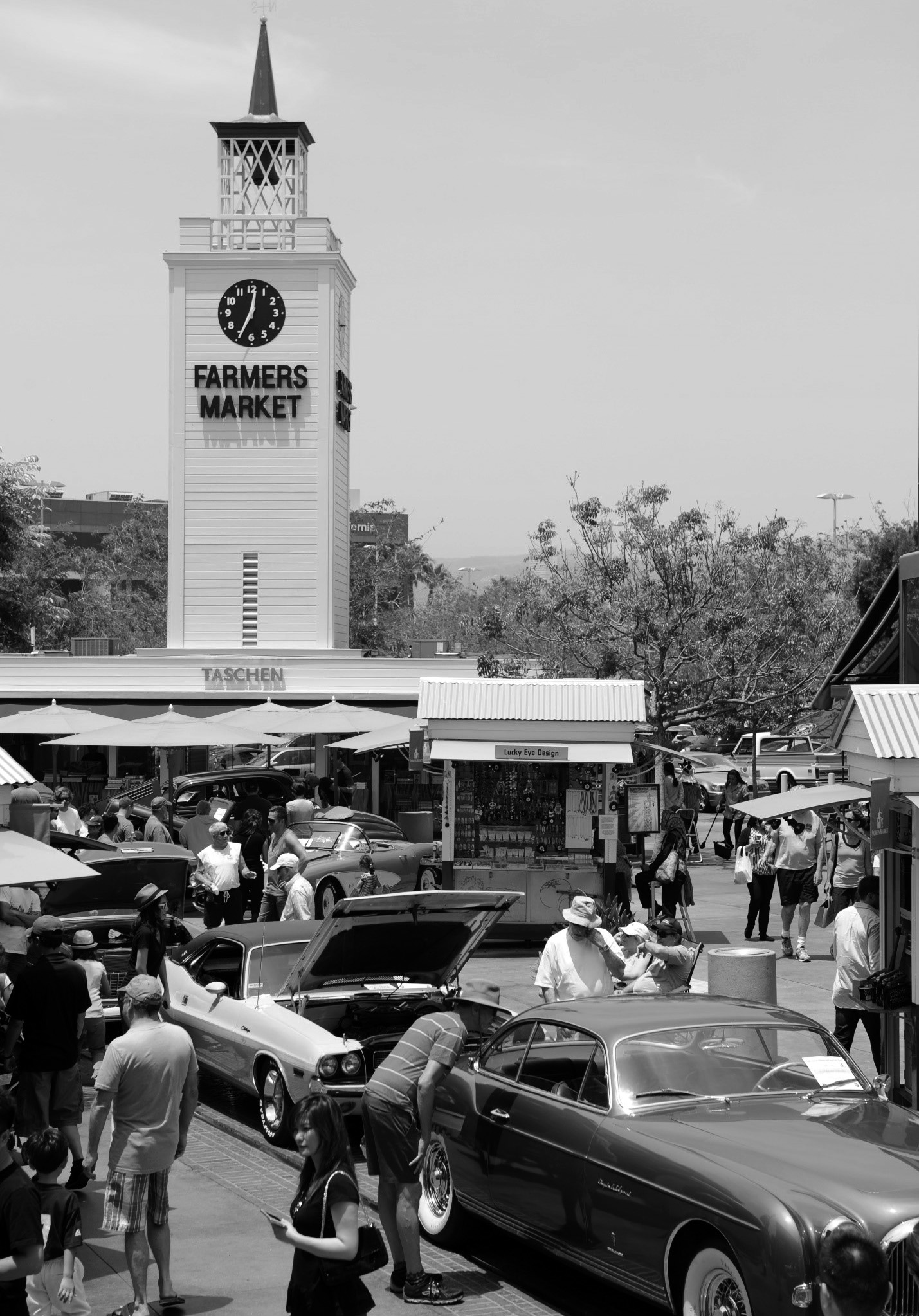
| (1994)* – Gilmore Heritage Auto Show celebrating the 60th anniversary of Farmers Market. |
Historical Notes The Gilmore Heritage Auto Show began as part of Farmers Market's 60th anniversary celebration in 1994, honoring the Gilmore family's long association with Southern California's automobile culture. |
 |
|
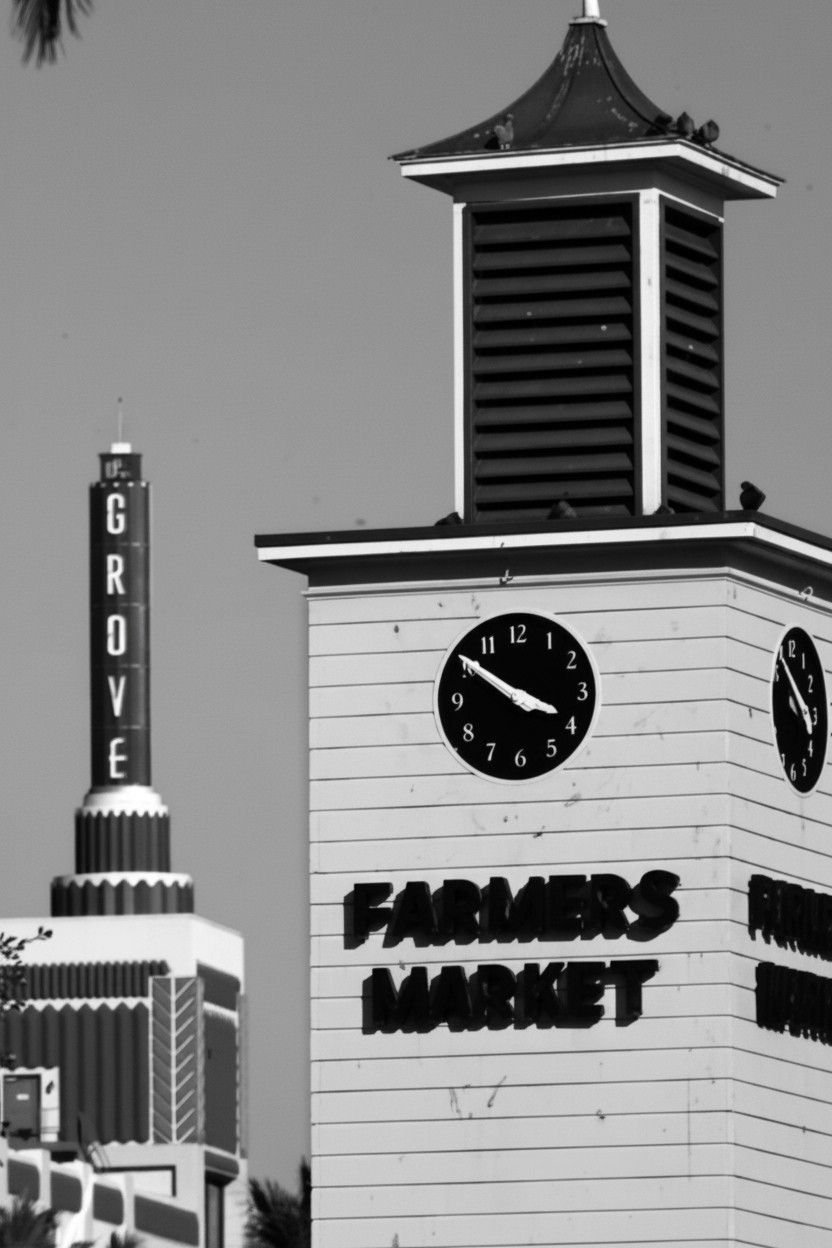
| (2009)* – The Farmers Market Clock Tower stands in the foreground, with the tower of The Grove in the distance. |
Historical Notes The Grove opened next to Farmers Market in 2002, bringing a major new shopping and entertainment development to the former Gilmore property. Despite the changes around it, Farmers Market retained its distinctive collection of food stands, shops and restaurants. |
 |
|
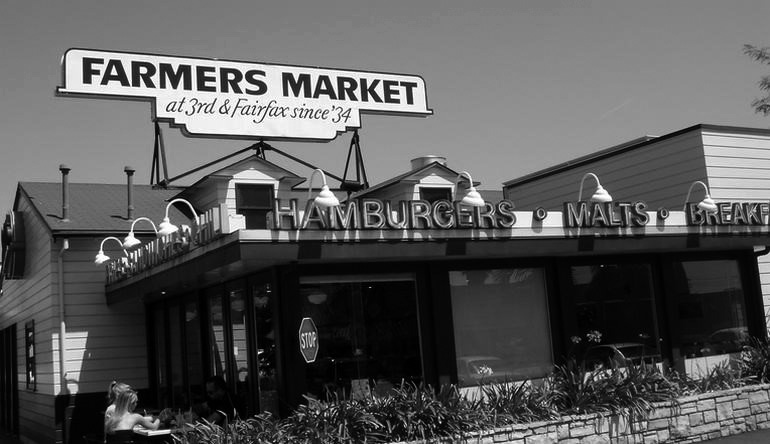
| (2017)* - The Original Farmers Market at Third Street and Fairfax Avenue, more than eight decades after it opened in 1934. |
Historical Notes Farmers Market was designated Los Angeles Historic-Cultural Monument No. 543 on July 24, 1991. Although the surrounding neighborhood has changed considerably, the market continues to occupy the corner where it began in 1934. |
Then and Now
 |
|
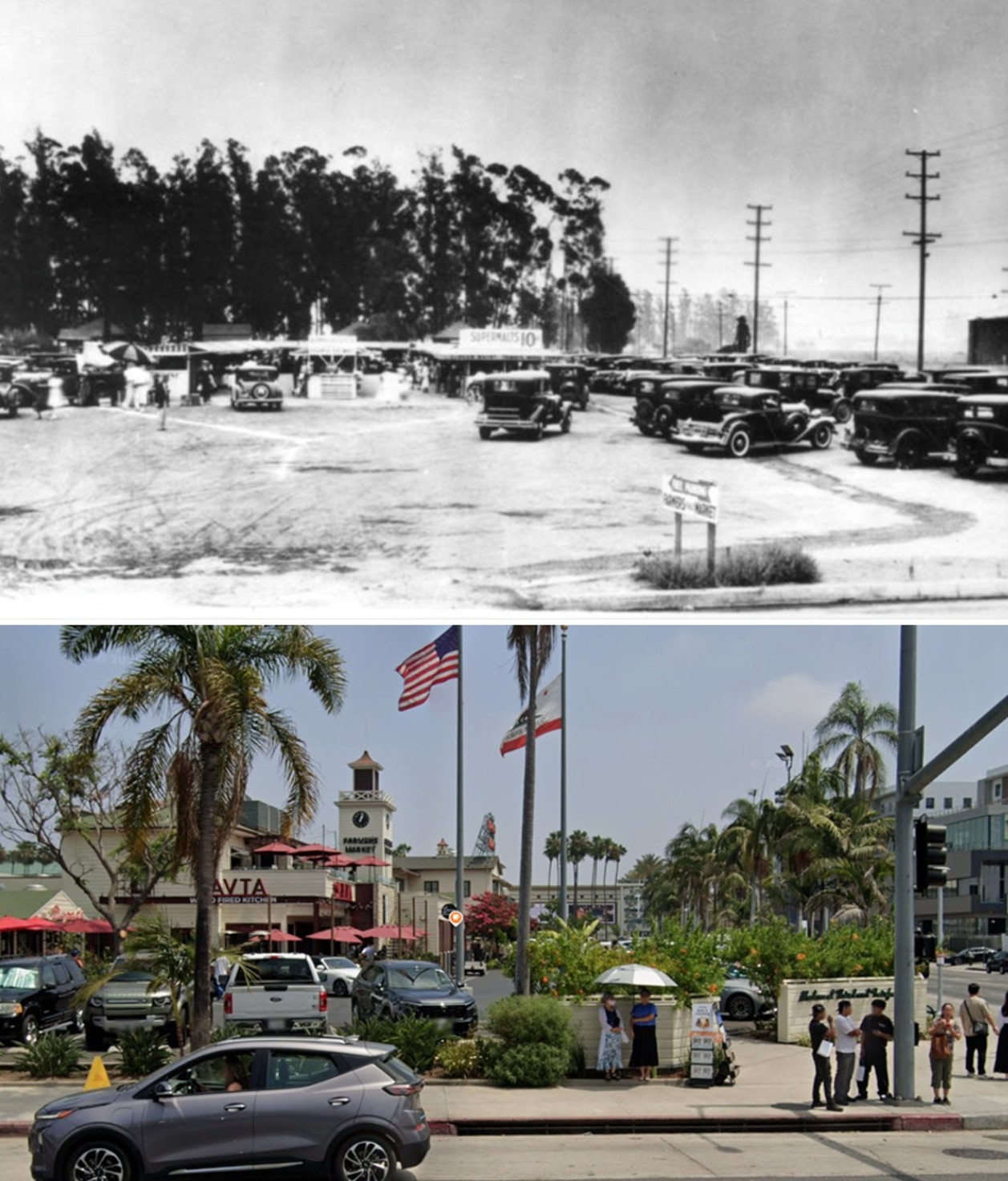
| (1934 vs. 2025)* – The northeast corner of Third Street and Fairfax Avenue, home of Farmers Market, more than 90 years apart. Photo comparison by Jack Feldman. |
Historical Notes The early view shows Farmers Market in its first years, with simple buildings, dirt parking areas and relatively little development around it. More than 90 years later, the same corner remains anchored by the market that began there in 1934. |
 |
|
| (1938 vs. 2022)* - Aerial views showing Farmers Market and the surrounding Third and Fairfax area more than eight decades apart. Photo comparison by Jack Feldman. |
Historical Notes In 1938, Farmers Market was surrounded by large areas of open land, with Gilmore Stadium to the north and the future site of Gilmore Field nearby. By 2022, CBS Television City and The Grove occupied much of the surrounding property, while Farmers Market remained in essentially the same location. |
Research, writing, and image curation by Jack Feldman, Water and Power Associates, with editorial assistance.
* * * * * |
More Historical Early Views
Newest Additions
Early LA Buildings and City Views
History of Water and Electricity in Los Angeles
* * * * * |
New Search Index |

A new SEARCH INDEX has been added to help navigate through the thousands of topics and images found in our collection. Try it out for a test run.
Click HERE for Search Index |
* * * * * |
< Back